|
Cameras/Computers/Electrical Equipment This information was written for the 2004 Program by Terran Palmer-Angell of SLU, who found his electronic gear to be very helpful in India. Terran writes: All of your electronic equipment can be just as useful and safe in India if you follow a few important rules. Find out if the AC Adapter for your computer/camera/etc. has a surge protector built into it, and/or if it can handle the Indian Voltage. Many computer AC adapters are being built now with surge protectors, and many electrical devices in general (including computers) are being built with the ability to handle a wide range of voltage. To find out if your computer adapter has a built in surge protected (HIGHLY RECOMMENDED) call your computer company. To find out if your device can handle the Indian current, check the sides of your AC adapter for its input abilities. It will usually say "Input: 100-240V", if it does indeed have a range this wide, then it will be able to handle Indian Current. If it does not have a range that goes up to 240, then you need to move to step 2. If your device does not have the range to deal with India’s high voltage current, and you’re not discouraged enough to leave it at home, then you’ll need to purchase a fun gadget that modifies the Indian current so that your device can handle it. If you need to do this, then you can look online for International electronic adapter packages online, or, if you are a AAA member, then you can roll on to the local AAA and purchase one there. These packages will have other useful things in them that you NEED to purchase for electronic devices anyway (as mentioned in step 3) No matter what your device is, and how adaptable it is to Indian
current and surges, you’ll need a little piece that plugs into the
Indian electrical outlets, and allows your two prong, flat plug, to
fit into the Indian outlet (which is rounded, and will have either
two or three prongs). Back to the power surge Issue. If you are bringing a laptop, you really need a surge protector. Indian current is ridiculously unstable, and you’ll catch surges at least a few times while you’re there. Because of this, have your laptop protected, and keep your other devices (cell phone, camera, etc.) charging only during calm times of day. If you speak with the locals (i.e., your hotel manager, or lecturers) often times they will be able to tell you when the current is stable, which tends to be in the evening, night, and especially early morning. Finally, if you are Bringing a laptop, I would highly recommend
that you purchase a "laptop backpack" with a padded laptop
compartment. This will allow it to travel comfortably, and much more
safely. Once you do this, be sure to buy locks for the zippers on
that backpack. Finally, and most importantly, I would recommend
buying a cable lock for the laptop, so that you can lock it to a
secure object in preparation for any periods in which it will be
unattended. This is an idea of what the cable locks generally look
like. P.S. – A NOTE ABOUT DIGITAL MEDIA IN INDIA – The DVDs in India look
very cheap, and work fine while you’re in India, however, they don’t
work on normal DVD players back in the States.
Internet: There are a number of Internet companies in India, and if you have your own computer, it will be very, very useful to purchase a plan from them (so that you can connect your computer to the Internet through any phone line, and can avoid the expensive fees at internet cafés and at the Ahuja Residence – trust me that’s a ripoff). Before purchasing, however, be sure that the plan offers both service and a help line in most of the cities you’ll be visiting. Companies like "Data Infosys LTD." Will claim that they offer great service, but will provide, at best, service at about 5% of the time you try to log on. DO NOT PURCHASE A PLAN FROM THIS COMPANY!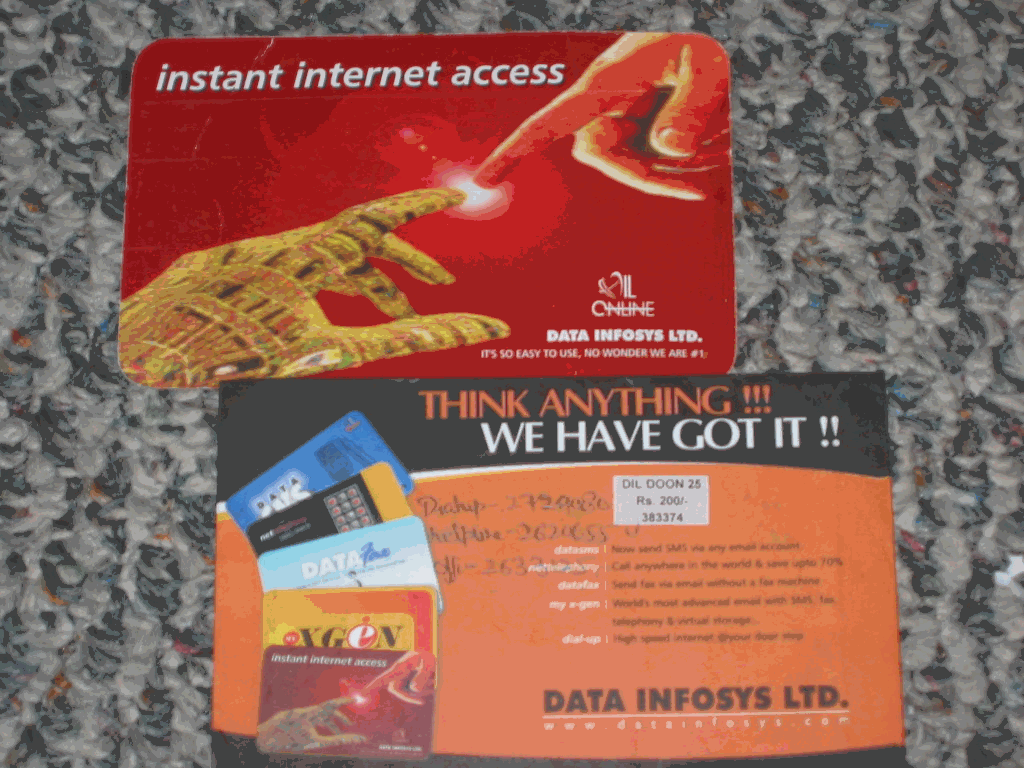
Though no companies that I found were truly as great with customer
service as those you may be used to here at home, the very best that I
found was a plan from VSNL – DO PURCHASE A PLAN FROM THIS COMPANY.
If you do not feel up to purchasing these plans, and would like to try to figure out the issue of internet service from the homeland, you can contact your own dial-up service, and talk to them about IPASS. I pass is a program you can download from your internet company’s website (whether it be earthlink, AOL, etc.) Call them first to discuss how you will go about using IPASS, and the charges that will be associated. IPASS becomes an extension of the dial-up application on your computer, allowing you to select numbers for different areas in India, but unfortunately it may not have access in many of the places you will be going (though my company did offer service in Benaras). I can, however, guarantee that using IPASS WILL be more expensive than purchasing an Indian plan, and in many cases will cost almost as much, if not more than a phone call home without a phone card.
|
 This
little piece can be purchase for just a couple dollars at a AAA, or
online but is usually included with an International power adapter
package (be sure to check the package for a "South Asia" or "India"
adapter.) They look much like what you see above, though many of
them will have only three holes, without the open section down the
middle found on this little guy),
This
little piece can be purchase for just a couple dollars at a AAA, or
online but is usually included with an International power adapter
package (be sure to check the package for a "South Asia" or "India"
adapter.) They look much like what you see above, though many of
them will have only three holes, without the open section down the
middle found on this little guy),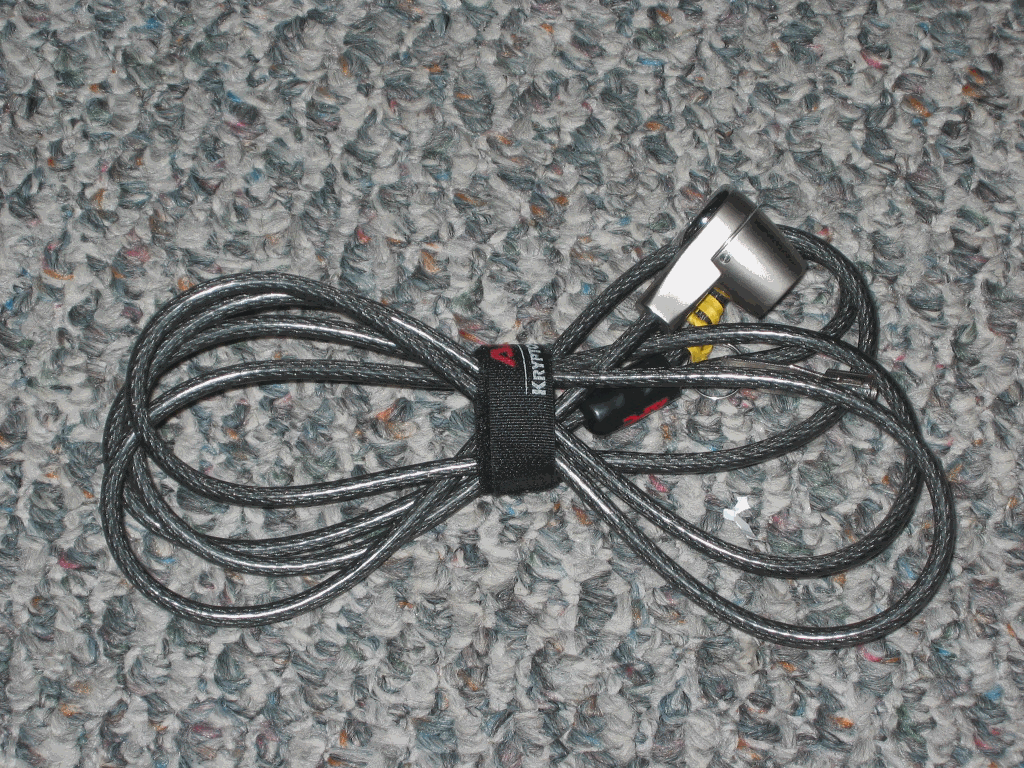 Laptops seem
expensive here, but in India you can buy a brand new car for the
amount of money they cost.
Laptops seem
expensive here, but in India you can buy a brand new car for the
amount of money they cost. Additionally, on any
given laptop, you can change the region code of your DVD player to
play Indian DVDs, but this will cause an inability to play American
DVDS, forcing you to switch the region code back to America to play
them. Unfortunately, most computer DVD drives only allow you to switch
region code 4 times, so this game can become costly very quickly.
Additionally, on any
given laptop, you can change the region code of your DVD player to
play Indian DVDs, but this will cause an inability to play American
DVDS, forcing you to switch the region code back to America to play
them. Unfortunately, most computer DVD drives only allow you to switch
region code 4 times, so this game can become costly very quickly.  They offer service
in almost everywhere you will be going, except for in Benaras.
However, very cheap internet service can be found in Benaras through
IWAY internet cafes, which provide T-1 speed as well. To
purchase a plan from them, you can go online even before you leave the
US to www.tataindicom.com. From there you can email them, and request
a service package, pay with a credit card and be all set.
They offer service
in almost everywhere you will be going, except for in Benaras.
However, very cheap internet service can be found in Benaras through
IWAY internet cafes, which provide T-1 speed as well. To
purchase a plan from them, you can go online even before you leave the
US to www.tataindicom.com. From there you can email them, and request
a service package, pay with a credit card and be all set.